Written by Joe Winch, CEO, Climb 2 Recovery.
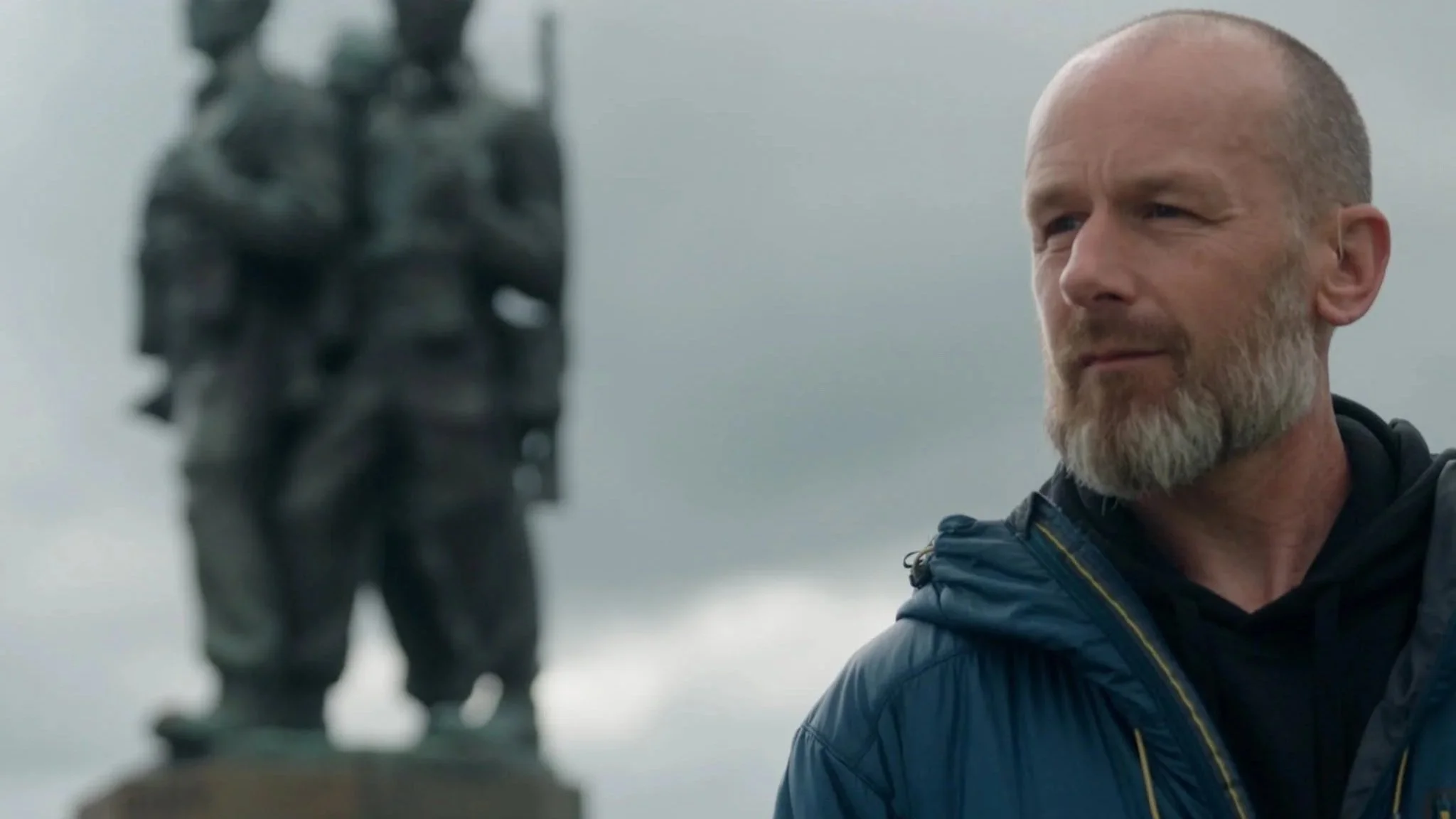
Introduction: Before you read this, it is worth knowing that this is not an abstract argument. It is the product of years of living inside the system I am about to describe. Years of appointments, questionnaires, treatments and reassurances. Years of trying to reconcile what I was being told with what I was actually experiencing. Years of believing the problem must be me. It is also the product of survival. Of sitting at kitchen tables at two in the morning wondering how this became my life. Of watching other veterans struggle, some quietly disappearing, some not making it at all. Of recognising that something in the way we define recovery does not always match the way it feels.
And yet, despite all of that, I am still here.
Still showing up. Still building. Still trying to contribute something useful from what I have learned — not to criticise, not to diminish the extraordinary clinicians who work tirelessly, but to ask whether we might raise our ambition together. What follows is not a rejection of what exists. It is an invitation to widen it, to do so much more.
Thank you for hearing me - Joe. Make it stand out
.
This paper is not a critique of effort, nor a rejection of what exists. It is a reflection drawn from lived experience, supported by emerging science, and informed by years of working alongside veterans navigating recovery.
Its central argument is simple: Our understanding of trauma has evolved. Our definition of recovery has not kept pace.
For many years, trauma was understood primarily as a disorder of fear and memory. Within that model, recovery was defined by the reduction of symptoms—measured through validated questionnaires and diagnostic thresholds. This framework remains internally coherent and has helped many people.
But it is no longer sufficient.
Increasingly, trauma is understood as a whole-of-life injury—affecting not only symptoms, but the nervous system, relationships, identity, and sense of meaning. It shapes how a person experiences safety, connection, and themselves. It is not simply something that is remembered. It is something that is lived.
Under this broader understanding, recovery cannot be reduced to symptom reduction alone.
Yet many current systems continue to define recovery in precisely those terms. As a result, individuals may be classified as “recovered” while still experiencing profound disruption in their daily lives—disconnection from family, impaired functioning, loss of purpose, and persistent dysregulation.
This creates a critical gap between recovery as measured and recovery as lived. That gap is not theoretical. It is widely recognised across the veteran community.
It is also reinforced by what current data does not capture. Recovery statistics typically reflect only those who access, remain in, and complete treatment. They do not account for those who never present, those who are excluded, those who disengage, or those who experience only partial or unsustained improvement. The picture is therefore incomplete.
Alongside this, there has been a second, less recognised shift.
Trauma was once considered relatively rare, associated with extreme events. Increasingly, it is understood to be far more widespread—shaped not only by events, but by how individuals experience and adapt to them. Not uniform in severity, but present across a much broader proportion of the population than previously assumed.
This matters because trauma does not remain confined to symptoms. Where present, it can influence how individuals function across multiple areas of life, including relationships, employment, housing stability, and long-term health.
This does not mean trauma explains all social or economic challenges. But it does mean that recovery is not separate from these outcomes. It is one of the factors that underpins them.
If we have underestimated both the depth and the prevalence of trauma, then we may also have underestimated the scale of response required. In this context, recovery must be understood more broadly.
Clinical care remains essential. It stabilises crisis, reduces suffering, and, in many cases, saves lives. But it is not, on its own, sufficient to restore a life. Recovery must also include what might be described as the nonclinical foundations: environments and experiences that support regulation, belonging, identity, and progression over time. These are not peripheral. They are central to how people rebuild.
Community, in this sense, is not a form of respite. It is a mechanism of recovery.
This is reflected in growing evidence that social connectedness is one of the strongest protective factors against suicide and one of the most consistent predictors of long-term health outcomes. Trauma isolates; recovery reconnects.
For some veterans, even this broader model is not enough. A subset engage fully with existing systems— clinical and community—but do not achieve meaningful recovery. For these individuals, the concept of “treatment-resistant” trauma raises important questions about the limits of current approaches.
Emerging research into new therapeutic modalities is beginning to explore these limits. The appropriate response at this stage is neither advocacy nor dismissal, but careful, ethical, and evidence-led engagement.
Taken together, these shifts point to a clear conclusion: If trauma is multi-dimensional in its impact, recovery must be multi-dimensional in its response. This has practical implications for how the system is structured, how outcomes are measured, and how different forms of provision are understood and integrated.
The paper proposes a set of aligned, system-level actions.
First, there is a need for a shared, cross-sector definition of trauma and recovery that reflects current scientific understanding and lived experience. A formal review, potentially through a Defence Select Committee inquiry, would provide the authority and neutrality required to establish this.
Second, there is an opportunity to create a more coherent recovery framework across the sector, bringing together clinical care, non-clinical recovery, wellbeing provision, and emerging interventions within a clear and complementary structure. This would support more effective coordination and more transparent commissioning.
Third, non-clinical provision requires formal definition and standards. Work to develop a Non-Clinical Service Provider Standard is already underway within the sector. It is grounded in practice and supported by emerging clinical and academic input, but currently lacks formal mandate and resourcing. Supporting and scaling this work would represent a significant step forward.
Fourth, outcome measurement must expand beyond symptom reduction to include social connection, functional capacity, purpose, and identity—domains that are closely linked to wider policy priorities, including employment and long-term stability.
Finally, the system must retain the ability to engage with emerging approaches in a structured and responsible way. This requires governance mechanisms that allow for monitoring, evaluation, and ethical exploration, particularly for those with unmet need.
Importantly, much of this work is already in motion. It is being developed by practitioners and organisations operating within delivery, often without formal mandate or resource. The opportunity now is not to build something new, but to recognise, align, and support what is already emerging.
The veteran support sector has evolved significantly over the past two decades. It has saved lives and reduced suffering. But as our understanding of trauma has advanced, so too must our ambition. The question is no longer whether we can stabilise. It is whether we can restore.
If trauma is more widespread than previously understood, and its effects extend across health, relationships, and long-term stability, then recovery is not a niche concern. It is a system-wide one.
The foundations are already in place. The task now is to bring them together—and act
Section One: When the Map Changes
From time to time, our understanding of the world shifts so fundamentally that everything built on the old view begins to look slightly misaligned. Not because anyone was careless or malicious — but because the map was incomplete. Science advances this way. Medicine advances this way. We operate for years within one paradigm — one organising story about how things work — and then gradually, sometimes reluctantly, we realise the story needs revising.
Trauma is in the middle of one of those shifts.
For decades, trauma was primarily understood as a disorder of the mind — more specifically, a disorder of fear circuitry. The explanation was neat, almost mechanical. Something overwhelming happened. The brainstem and amygdala — the alarm system — became overactive. The prefrontal cortex, the rational part, struggled to regulate it. Treatment followed logically: process the memories, reduce the fear response, repack the messy wardrobe of distressing experiences so they no longer spilled out unexpectedly.
It was a compelling model. I sat through countless explanations like this — drawings of brain structures, arrows between them, metaphors about clothes strewn across a bedroom floor. The aim was clear: tidy the wardrobe, and life would feel orderly again.
And in that framework, recovery was equally clear. If symptoms reduced — if questionnaire scores dropped — then recovery had occurred. Symptom reduction and recovery became, in effect, interchangeable. The logic was internally consistent. If trauma is primarily a malfunctioning fear response, then easing that response signals healing.
Crucially, this model still underpins much of contemporary treatment. It informs how services are structured, how outcomes are measured, how success is reported. And it has helped many people. That deserves acknowledgement.
But over the past two decades, something changed.
Clinicians and researchers began to notice a persistent mismatch. On paper, people were improving. Scores were falling. Diagnostic thresholds were no longer met. Yet many still struggled profoundly — with relationships, identity, purpose, embodiment, belonging. Something deeper remained unsettled. Recovery, in the fullest human sense, often remained elusive.
Out of that tension, a broader understanding of trauma emerged. Pioneered and articulated by thinkers such as Bessel van der Kolk and others, trauma came to be seen not simply as a disorder of memory or fear circuitry, but as a whole-of-life injury. An injury that is neurological, yes — but also physiological, relational, developmental, and existential. An injury that reshapes how we inhabit our bodies, how we attach to others, how we experience time, safety, meaning, and ourselves.
In this newer understanding, trauma is not just something stored in the mind. It is something carried in the nervous system, in patterns of disconnection, in identity, in the body’s felt sense of threat or numbness. It is woven into how a person moves through the world.
Seen through this lens, it becomes possible — even likely — that we have underestimated trauma. Not slightly, but spectacularly.
And if that is true, then it follows that treatment models designed for a narrower definition may be incomplete. More challenging still, our measures of recovery — often based on symptom checklists and diagnostic thresholds — may no longer be adequate to capture what genuine restoration looks like.
When the definition changes, everything built upon it must be re-examined.
We may not have been wrong. But we may have been looking at too small a picture.
Section Two: The Red Flags
I did not arrive at this shift in thinking through ideology. I arrived at it through discomfort.
The first red flag came quietly, in a consulting room. A psychiatrist added up my PTSD questionnaire scores and smiled. The numbers had dropped. I was close to sub-clinical. This, I was told, was real progress — evidence that treatment was working. It was framed, gently and professionally, as recovery.
But inside I felt deadened. Numb. Cut off from my wife, from my children, from myself. Sleep was fractured. Joy was absent. Connection felt theoretical. What struck me most was not that the scores had changed — it was that none of the things that actually mattered to me appeared to count. There was no box for love. No metric for aliveness. No scale for whether I felt present in my own life.
On paper, I was improving. In reality, I was receding.
The second red flag was more subtle. With each new specialist, trauma was carefully explained again — the brainstem, the amygdala, the frontal cortex. Diagrams. Arrows. Wardrobes. It was all coherent. It made sense within its own logic. But it began to feel incomplete.
Outside the clinic, I was reading the emerging research. I was paying attention to my own lived experience. Trauma did not feel confined to a malfunctioning fear circuit. It felt embodied. Relational. Somatic. It showed up in my posture, in my breathing, in my startle response, in my inability to tolerate closeness. It lived in the way I inhabited silence. It was not just a set of memories needing rearrangement; it was a way of being in the world.
There was a widening gap between the model being presented to me and the reality I was living.
The third red flag emerged when I began reading impact reports from respected clinical organisations. Many reported very high rates of recovery for complex trauma. The figures were impressive — and understandably so. Services need to demonstrate effectiveness to funders, commissioners and policymakers. Outcomes matter and public money demands accountability.
But something did not sit easily.
Over more than a decade in this space — first as a patient, and now as CEO of Climb 2 Recovery, where I have worked alongside hundreds and met thousands of veterans living with complex trauma — I have rarely encountered veterans who, having completed conventional treatment, would describe themselves as “recovered” in the way those statistics implied. Improved, sometimes. More stable, occasionally. But recovered? That is a different word entirely.
The gap was striking.
But I didn’t for a moment believe these organisations were dishonest. On the contrary, I know many dedicated and wonderful clinicians working with skill and integrity. Which meant the issue, if there was one, was not about intent. It was about definition.
This led to the fourth red flag, which forced me to look more closely at that definition — to understand what, precisely, was being claimed?
This is where it became truly revealing. Because I realised that in much of the sector, “recovery” did not mean what I had always assumed it meant — not fully fit, not the restoration of health, not the absence of illness. In trauma care, recovery is typically defined as no longer meeting diagnostic criteria for PTSD at the end of treatment. In practice, that determination is made using validated, self-reported questionnaires. It is a standard, widely accepted definition. It is usually caveated carefully in the detail. And within the prevailing clinical framework, it is methodologically sound.
But in practical terms, it can mean the difference between a questionnaire score of 30 — categorised as recovered — and a score of 34 — categorised as still clinically significant. Four points. The line between statistical success and life-altering diagnosis can be that narrow.
Under the older, symptom-focused model of trauma, this makes sense. If trauma is primarily a cluster of symptoms, then reducing those symptoms below a threshold signals recovery.
Under a broader understanding — one that sees trauma as multi-dimensional, embodied, relational and identity-shaping — that same definition begins to feel incomplete. A person may fall below a diagnostic cutoff while still living with profound functional limitation, emotional disconnection, physiological dysregulation, or fractured relationships.
The metric itself is not wrong. But it may not be measuring what we most care about.
And when the definition of recovery rests almost entirely on that metric, the risk is not abstract. It is human.
Section Three: The Implications
This is the pivotal point.
Under the older conception of trauma — as a disorder primarily defined by symptom clusters — it was entirely legitimate to describe someone as recovered if, at the end of treatment, their scores had reduced below a diagnostic threshold. Within that model, symptom reduction was recovery. The logic was coherent.
But under a broader understanding — one that recognises trauma as multi-dimensional, embodied, relational, identity-shaping — the implications are far more complex.
Because now we may be describing as “recovered” someone who still lives with significant symptoms. Someone who may technically fall below a diagnostic cut-off but continues to experience disrupted sleep, emotional numbing, hyperarousal, fractured relationships, loss of purpose, diminished capacity for joy. Someone who retains functional limitations — in work, in intimacy, in parenting, in ordinary daily life. Someone whose nervous system remains dysregulated, whose sense of self remains altered, whose world still feels smaller than it once was.
In other words, we may be declaring recovery in statistical terms while the wider architecture of a person’s life remains profoundly affected.
For veterans, this carries a particular weight.
To be told — repeatedly — that you are doing well, that you are recovering, that progress is evident, while internally you feel worse, more distant, more fragmented, is destabilising. It creates a quiet dissonance. If the system says I am improving, but I feel as though I am going backwards, there is only one obvious conclusion left: it must be me. I must be failing. I must not be trying hard enough. There must be something fundamentally wrong with me.
I see this pattern often. The internalisation of that gap. The additional layer of shame. The isolation that follows. Not just wounded by trauma, but burdened by the belief that you are uniquely defective because you are not responding as you “should.” That is not a small consequence. It compounds injury.
There is another implication, less personal but equally significant.
If our metrics suggest that we are already achieving high rates of recovery, then the incentive to rethink, to innovate, to collaborate across disciplines, to experiment with new approaches, diminishes. If the scoreboard says we are winning, why would we change the game? Why would we question our definitions, broaden our partnerships, or invest in complementary models of care?
A narrow definition of recovery does not simply shape how we measure outcomes. It shapes how ambitious we are willing to be.
And if our understanding of trauma has expanded, but our definition of recovery has not kept pace, then the risk is not only that individuals are left feeling unseen. It is that the system itself becomes less curious, less urgent, less willing to ask whether we could do better.
That is the real implication.
Section Four: A Necessary Pause
To step back from metrics and models and ask a quieter, more fundamental question: is this really what we mean by recovery? Is this the level of ambition we are prepared to settle for?
Paradigms matter because they quietly define the limits of our imagination. If trauma is understood narrowly, then recovery will be defined narrowly. If trauma is seen as a cluster of symptoms, then reducing those symptoms becomes the goal. But if trauma is, as the emerging science suggests, a whole-of-life injury — neurological and physiological, yes, but also relational, developmental, social and existential — then recovery must mean something more than crossing a statistical threshold.
It must mean restoration of capacity. Restoration of connection. Restoration of self.
When we reduce recovery to a score on a subjective questionnaire — however validated, however methodologically sound — we risk mistaking measurement for meaning. A tool designed to assess symptom severity becomes the arbiter of whether a human life has been put back together. An arbitrary cut-off point begins to carry moral and existential weight.
That is not a criticism of the tools themselves. They have value. They provide structure and comparability. But they were never designed to capture the full architecture of a human life.
And this, I suspect, is why there is so often a mismatch between a recovery that is claimed and the recovery that is lived. It explains why someone can be told they have made excellent progress, that they are a treatment success, while still waking in the early hours wired and alone. Why they can be discharged as recovered while their marriage is fragile, their sense of purpose uncertain, their nervous system still braced for threat. It explains why so many of us continue to suffer quietly, even as the system records improvement.
That was certainly my experience. For years I was told I was doing well. That the therapy was working. That the trajectory was positive. And yet, at key points, my internal world felt increasingly chaotic. There were periods where intensive treatment seemed to destabilise more than it restored. The narrative of progress and the reality of my life were moving in opposite directions.
This is not an argument for abandoning clinical care. It is an argument for aligning our definitions with what we now understand trauma to be. If trauma reshapes the whole person, then recovery must aim at the whole person too.
Otherwise, we risk congratulating ourselves on movement while missing the deeper question: are people truly getting their lives back?
Section Five: What the Numbers Don’t See
Even if we accept, for a moment, the current definitions and the current metrics, there are further complications — realities that sit just beyond the frame.
Because the statistics we rely upon tell us something important. But they do not tell us everything.
The first blind spot is simple: many veterans never seek clinical help at all.
We know this. Pride. Stigma. Fear of career consequences while still serving. Distrust of systems. Previous poor experiences. A culture that prizes endurance. A belief that others are worse off. Or simply the quiet erosion of motivation that trauma itself produces.
Some do not want to sit in a clinic and recount their worst moments to a stranger. Some do not recognise what they are experiencing as trauma. Some have been taught, implicitly or explicitly, that asking for help is weakness. Others are too exhausted to navigate referral systems and waiting lists.
If our recovery statistics are based only on those who present for treatment and complete it, then they describe a subset — not the whole. They tell us how many improve within the system. They tell us nothing about those who never enter it.
The scale of suffering is therefore larger than the scale of treatment.
The second blind spot concerns exclusion.
Over the years, I have met many veterans who did seek help — and were turned away. Some were deemed too complex: additional diagnoses, personality adaptations, neurodivergence, chronic pain, substance use layered on top. Some were considered too unstable. Some were told their trauma was not sufficiently service-related — as though there were a hierarchy of suffering, and certain forms of pain counted more than others.
Others fell at the opposite end: not severe enough, not complex enough, not meeting criteria at that moment. Some lived primarily with depression, moral injury, hypervigilance without flashbacks, emotional numbing, chronic shame, relational breakdown, sleep disorders, anxiety disorders, dissociation, or profound loss of identity — conditions deeply intertwined with trauma, but not always captured neatly within a single PTSD diagnosis.
These veterans do not appear in recovery statistics either. They are not counted among successes or nonresponders. They are simply absent.
Invisible in the data does not mean absent in reality.
The third blind spot is attrition.
Waiting lists can stretch for months. During that time, life continues to unravel. Some deteriorate before treatment even begins. Others disengage once therapy starts because it is destabilising, triggering, or simply overwhelming. Trauma therapy is demanding work. Drop-out rates across mental health services are consistently significant.
Even among those who complete treatment, non-response is not uncommon. A meaningful proportion — often estimated at around one third — experience limited or no sustained benefit at all; that was my experience too. And for those who do respond, improvement is frequently partial. A reduction of ten or fifteen points on a symptom scale may represent progress, and that should be acknowledged. But it is not necessarily restoration. Relapse, too, is a frequently recognised reality.
The numbers tell us something.
They do not tell us everything.
The fourth blind spot is more personal.
I showed up. I did what was asked of me. I engaged relentlessly. On paper, progress was visible. Scores moved. Clinicians saw improvement. Yet during periods of intensive treatment, my internal world often felt more chaotic, not less. Risk increased. Strain increased. In the medium term, the gains were fragile.
When I tried to articulate that something was not right — that the narrative of progress did not match my lived experience — it was difficult to be heard. The data suggested movement in the correct direction. And data carries authority.
I see this pattern repeatedly now in others. The metrics are informative. They are not comprehensive.
And finally, there is the broader contradiction.
If we are achieving consistently high recovery rates for complex trauma, one might expect to see that reflected in the wider landscape: declining crisis, fewer veterans struggling with homelessness, addiction, chronic unemployment, fractured relationships, despair. One might expect suicide rates to fall decisively.
Yet the wider mental health crisis persists. Over twenty years of operations in Iraq and Afghanistan, the United Kingdom lost 633 service personnel — 179 in Iraq and 454 in Afghanistan. Those losses were visible, publicly mourned, and rightly honoured. And yet, in 2021 alone, 253 UK veterans died by suicide in England and Wales. In a single year, the number was approaching half the total combat fatalities across two decades of war. Most strikingly, the majority of those who died were not in contact with specialist veteran mental health services at the time of their death.
This is not a comparison made lightly, nor is it an attempt to conflate very different kinds of tragedy. It is simply to observe a contradiction. If we are achieving consistently high rates of recovery from trauma, we might expect to see that reflected in decisively falling crisis and suicide rates. But much of the suffering appears to sit beyond the boundaries of the system we measure. And that, too, must form part of the picture when we ask ourselves how well we are truly doing.
Are we winning? Or are we measuring victory too narrowly?
These are not accusations. They are questions. But they are questions we cannot afford not to ask.
Section Six: So What Is Trauma, Really?
If we strip this back to first principles, the question is simple: what are we actually dealing with?
If trauma is a disorder of memory and fear circuitry, then our current definitions and treatments make sense. But if trauma is something larger — something that reshapes a person’s nervous system, identity, relationships and sense of safety in the world — then we are not just treating symptoms. We are responding to an injury that touches the whole architecture of a life.
The emerging science is increasingly clear on this point. Trauma is not simply an event that happened in the past. It is the imprint that event leaves on the body and brain. It alters stress responses. It changes baseline arousal. It affects sleep, digestion, attention, impulse control. It influences how safe we feel in our own skin and with other people. It shapes attachment, trust, and our capacity for intimacy. It can fracture identity — the sense of who I am and where I belong.
For many veterans, trauma is not a single incident. It is cumulative. Operational exposure layered on top of childhood adversity. Loss layered on top of moral conflict. Injury layered on top of transition stress. Over time, it becomes woven into physiology and personality. It is not just remembered. It is lived.
Seen this way, trauma is neurological and psychological — but also relational and social. It is about the nervous system, but also about belonging. It is about threat, but also about meaning. It is about survival, but also about the loss of aliveness.
And if that is what trauma is, then recovery cannot simply mean symptom reduction.
Recovery must involve the restoration of regulation — a nervous system that can settle. It must involve reconnection — to family, to community, to purpose. It must involve the rebuilding of identity — not just “no longer ill,” but able to move forward with agency and hope. It must include sleep that restores, relationships that nourish, work or contribution that feels meaningful.
In other words, recovery must reach beyond the clinic.
This does not diminish the value of therapy. On the contrary, it situates it properly. Clinical treatment can interrupt traumatic loops. It can reduce symptom severity. It can provide insight and coping strategies. For many, it is essential.
But if trauma affects the whole person, then recovery must engage the whole person. It must address the biological, the psychological, the relational and the social together. It must consider not only what has been stabilised, but what has been rebuilt.
Once we define trauma in this broader way, the question is no longer simply, “Did the symptoms fall below a threshold?”
The question becomes, “Is this person regaining their life?”
The Prevalence We Underestimated
There is a further shift that sits beneath all of this — and it is often under-recognised. For many years, trauma was understood as relatively rare. It was associated with extreme or exceptional events, affecting a limited proportion of the population. Within that framing, it was possible to see trauma as a specialised problem, requiring specialist intervention.
Increasingly, the evidence suggests something more complex.
Trauma is not defined solely by the event itself, but by the individual’s experience of it — by how the nervous system registers and adapts to overwhelm, threat, or disconnection. As a result, exposure is far more widespread than previously assumed. Not uniform, not identical in severity, but present across a much broader proportion of the population than earlier models allowed for. This has important implications.
If trauma is both deeper in its impact and broader in its prevalence, then its influence does not remain confined to symptoms or diagnoses. It shapes how people function across multiple areas of life — including relationships, employment, housing stability, and long-term health.
This does not mean that trauma explains everything. Many of these outcomes are shaped by structural, economic and social conditions. But where trauma is present, it can significantly influence how individuals engage with — and benefit from — those wider forms of support. Seen in this way, recovery is not a parallel concern to these issues. It is one of the factors that underpins them.
And if we have underestimated both the depth and the prevalence of trauma, then we may also have underestimated the scale of response required — not only within clinical systems, but across the wider structures that support people to rebuild their lives.
Section Seven: What Recovery Now Includes
Once we accept that trauma is whole-of-life in its impact, the implications for recovery become clearer.
We already recognise some of this. Housing support matters. Financial stability matters. Access to highquality clinical care matters. Crisis services matter. These are not peripheral interventions. They are foundational. Safety — physical, financial, psychological — is the bedrock upon which everything else is built.
But safety alone is not the same as life.
If trauma disrupts regulation, attachment, identity and meaning, then recovery must intentionally rebuild those domains too. And this is where the non-clinical foundations of recovery become central — not optional, not decorative, not a “nice to have.”
A regulated nervous system is not created solely in a therapy room. It is shaped in environments of predictability, trust and belonging. It strengthens through repeated experiences of safety with other people. Through shared endeavour. Through laughter. Through challenge that ends in mastery rather than threat. Through the slow accumulation of moments where nothing bad happens.
Community is not respite. It is regulation.
The evidence here is striking. Social connectedness is consistently shown to be one of the strongest protective factors against suicide. It is also one of the most powerful predictors of positive outcomes across both mental and physical health. Isolation, by contrast, increases mortality risk in ways comparable to wellknown medical risk factors. Belonging is not soft. It is biological.
Peer connection restores dignity and reduces shame. To sit with someone who understands — not academically, but through lived experience — recalibrates the nervous system in ways insight alone cannot. Trauma isolates; recovery reconnects.
Mastery matters too. Trauma shrinks the world. It narrows tolerance. It erodes confidence. Experiences of competence — learning, progressing, enduring something difficult and succeeding — begin to expand that world again. They rebuild agency. They shift identity from “damaged” to “capable.” Identity reconstruction is not abstract; it is built through action.
Forward orientation is equally critical. Trauma traps people in the past. Recovery requires something ahead — something to train for, to look forward to, to prepare for. A reason to get up early. A shared objective. Momentum generates hope.
And crucially, this work cannot be rushed.
Many clinical interventions are necessarily time-limited — six, eight, twelve weeks. That is often all systems can resource. But trauma rarely develops in twelve weeks. It accumulates over years. Expecting full restoration within a short treatment cycle may be unrealistic.
Non-clinical communities can offer something different: continuity. They can walk alongside someone for months and years. They can observe subtle shifts. They can notice early withdrawal. They can intervene not always with more therapy, but sometimes with movement, humour, shared hardship, connection.
This is not in opposition to clinical treatment. It is collaborative. When strong community foundations are in place, therapy can be more effective. When therapy ends, community can consolidate gains and reduce relapse. Each optimises the other.
It was from this understanding that Climb 2 Recovery was built — not as recreation, not as distraction, but as an intentionally designed, trauma-informed environment grounded in contemporary neuroscience and social science. A place where belonging, mastery, forward orientation and long-term engagement are structured, not accidental. And increasingly, we are working with partners across the sector to articulate and standardise what high-quality non-clinical provision should look like, so that this approach is not personality-led but principle-led.
There is also a pragmatic truth here. Peer-led, community-based recovery models are often highly cost effective compared to intensive clinical interventions. They are accessible. They appeal to veterans who may never voluntarily enter a clinic. They provide a bridge — sometimes into formal treatment, sometimes beyond it.
If trauma is whole-of-life, then recovery must be whole-of-life too.
It must include safety, yes — but also belonging. Stability, yes — but also growth. Symptom reduction, yes — but also reconnection, mastery and purpose.
Anything less risks managing injury without restoring life.
Section Eight: And For Some, We Must Go Further
Even if we widen our definitions. Even if we build stronger community. Even if clinical care improves. For some of us, it still isn’t enough.
There is a group of veterans — and I was one of them — who do not resist treatment. We lean into it. We show up early. We complete the programmes. We take the medication. We try again when it doesn’t work the first time. We build community. We do the work. We are not avoiding recovery — we are chasing it.
And yet something remains stuck.
The phrase often used is “treatment-resistant.” It is a blunt term. It sounds like prognosis. Like a verdict. But perhaps it says less about the individual and more about the limits of the model being applied. Sometimes what we call resistance is simply the nervous system’s last line of defence — patterns laid down over years, embedded far deeper than cognition alone.
Perhaps “treatment-resistant” is not a diagnosis at all, but a signal that we need to think differently. Over the past decade, one area of research has quietly forced that reconsideration: psychedelic-assisted therapy.
What was once dismissed is now being studied with seriousness and rigour for severe depression, end-of-life anxiety, and post-traumatic stress. In the United States, veterans — including many from special operations communities — grew tired of being told they were improving while their friends were dying. They organised. They testified before Congress. They lobbied. Some pursued legal action. They pushed the Department of Defense and the VA to diversify research funding. As a result, millions of dollars are now being invested into formal trials exploring MDMA, psilocybin, and other psychedelics, for trauma.
This is no longer fringe.
Major universities are running controlled trials. Peer-reviewed data is emerging that is warrants greater attention and focus. Significant and durable symptom reductions. High remission rates in populations previously described as treatment-resistant. And perhaps most strikingly, participants frequently describe the experience not simply as therapeutic, but as among the most meaningful or profound of their lives.
That language matters.
My own experience sits within that context.
After years of conventional treatment, I was told — kindly — that this might be as good as it gets. I did not feel healed. I felt managed. Stabilised perhaps. But not restored. And something in me refused to accept that this was the ceiling.
I followed the research. It led me to the Beckley Foundation here in the UK, and to its sister organisation, Beckley Retreats which operates within legal and structured frameworks abroad.
I arrived without reference points. I was apprehensive. Not because I expected something dramatic — but because I was more afraid that nothing would change. That this would be another attempt that proved the problem was me.
My expectations were modest. What happened was not fireworks. It was not fantasy. It was something quieter and far more important.
The numbness softened. Grief that had been frozen for years surfaced and moved. The rigid threat loops that had governed my inner world loosened their grip. I felt connected — to my wife, to my children, to myself — in a way that had been absent for a long time.
It did not erase history. It did not bypass the work. It did not replace therapy or community. But it opened a door that had remained shut despite everything else I had tried. More simply: it gave me my life back. I felt alive again.
And that raises an important question.
If approaches now exist that can facilitate this depth of change — even in a subset of people — then we are obliged to examine them seriously, and to ask whether our current definitions of recovery, and the systems built around them, are ambitious enough. This is not an argument for any one intervention. But it is a challenge to the idea that symptom management should be considered the limit of what is achievable.
For veterans who have exhausted conventional options, this line of research offers something that has been in short supply — grounded hope. Not hype. Not recklessness. But carefully governed, evidence-informed possibility.
The United Kingdom is well placed here. We have world-class research institutions. We have clinicians capable of leading responsibly. We have a veteran community willing to engage seriously. What we lack is coordinated will.
None of this requires abandoning what already exists. It requires expanding it.
If trauma is as complex as we now understand it to be, then recovery pathways must be equally sophisticated: clinical care, community foundations, social support — and, where lawful and appropriate, carefully regulated innovation.
Because for those who have tried everything, the alternative is quiet resignation. And resignation is not recovery.
Section Nine: Raising Our Ambition
I did not set out to challenge a system. I set out to survive it.
I did what was asked of me. I attended the appointments. I completed the programmes. I filled in the questionnaires. I listened carefully. I tried relentlessly. And for years I was told I was progressing. That the trajectory was good. That this was recovery.
But inside, something did not align.
It has taken time — and perspective — to understand that the mismatch was not about bad faith or lack of effort. It was about the map. We were operating from a definition of trauma that was too narrow, and therefore a definition of recovery that was too modest.
No one was careless. No one was malicious. But if we underestimate the scale of the injury, we inevitably underestimate the scale of the response required.
This is not an argument for less clinical care. It is an argument for more recovery.
Clinical services are essential. They save lives. They stabilise crisis. They reduce suffering. But trauma, as we now understand it, is not solely a clinical problem. It is a human one. It lives in bodies, in relationships, in identity, in meaning, in belonging. And so recovery must reach further than symptom management.
It must mean that someone can sit at a dinner table and feel present. That sleep returns. That laughter is natural again. That the future feels possible. That contribution replaces withdrawal. That life is not merely endured, but inhabited.
That is a higher bar.
Meeting it will require collaboration across clinical and non-clinical domains. It will require investing in longterm community, not just short-term intervention. It will require valuing social connectedness not as a soft outcome, but as a central determinant of health. It will require us to measure what matters — not only symptom reduction, but restoration of agency, belonging and purpose. And it will require openness to innovation where evidence justifies it, including carefully governed new therapies for those who have exhausted conventional pathways.
We do not need to dismantle what exists. We need to widen it — and deepen it.
We need our definitions to catch up with our science. Our metrics to reflect lived reality. Our ambition to match the scale of the injury.
Because when we tell a veteran they are recovered, that word should carry weight. It should resonate in their own experience. It should not feel like a technicality.
This is not about blame. It is about alignment — between what we know, what we do, and what we hope for. We owe those who have served more than stabilisation at the edge of their lives.
We owe them the possibility of fully living them again.
Section Ten: From Insight to Implementation — A Framework for Change
If the central argument of this paper is accepted — that our understanding of trauma has expanded, but our definitions and structures of recovery have not kept pace — then the question is no longer whether change is required, but how it is led and delivered. This is not a call for disruption, but for alignment.
The United Kingdom already has a strong and committed veteran support ecosystem. Clinical services, charities, and government bodies are working with skill and intent to improve outcomes. The challenge is not absence of provision, but coherence — ensuring that what is delivered reflects what is now understood about trauma, and what recovery meaningfully requires.
The following proposals are intended as practical steps toward alignment, building on work that is already underway within the sector.
1. Establishing a Shared Definition of Trauma and Recovery
At present, there is no single, cross-sector definition of trauma and recovery that reflects contemporary scientific understanding and lived experience. Clinical definitions remain valid within their scope, but they do not fully capture the broader, multi-dimensional impact of trauma now recognised across neuroscience, psychology, and social research. This creates inconsistency across commissioning, delivery, and evaluation — and shapes the level of ambition the system is designed to achieve.
There is a clear case for a formal, cross-disciplinary review — bringing together clinical, academic, and lived expertise — to address three foundational questions:
• How should trauma be defined, in light of current evidence?
• What constitutes meaningful recovery beyond diagnostic thresholds?
• How should success be measured across clinical and non-clinical domains?
A Defence Select Committee inquiry, or equivalent cross-government mechanism, would provide the appropriate authority and neutrality to undertake this work. Clarity at this level would not replace existing frameworks, but would strengthen them — ensuring that future policy and provision are grounded in a shared and current understanding.
2. Developing a Coherent Recovery Structure Across the Sector
The current veteran support landscape is extensive but structurally fragmented. Clinical services, community-based provision, and other forms of support often operate in parallel, without a unifying framework that reflects the full spectrum of recovery.
There is an opportunity for Cobseo to provide leadership in this area through the development of a more coherent Recovery Framework, structured around distinct but complementary domains:
• Clinical Care — assessment, diagnosis, and treatment
• Non-Clinical Recovery — structured, trauma-informed, community-based provision focused on regulation, belonging, identity, and progression
• Emerging Interventions — research, evaluation, and governance of new and developing approaches
• Wellbeing and Respite — short-term or supportive provision, recognised as valuable but distinct from structured recovery pathways
This is not about hierarchy, but clarity.
Such a structure would support more coherent pathways for veterans, improve coordination between organisations, and enable more transparent and effective commissioning. It would also allow different forms of provision to be properly understood and valued for the distinct roles they play.
3. Formalising Standards for Non-Clinical Recovery Provision
If non-clinical provision is to be recognised as a central component of recovery, it requires clear definition and consistent standards. Work to develop a Non-Clinical Veteran Service Provider Standard is already in progress in collaboration with Cobseo.
This work is being led by a small, practice-based collaboration of organisations with established expertise in delivery, supported by a growing group of clinical practitioners, researchers, and sector stakeholders. It reflects both lived experience and operational reality, and is grounded in contemporary science. Importantly, it is not theoretical. It is being developed from within delivery.
However, progress at present is constrained by limited capacity and informal resourcing. There is a clear opportunity for Cobseo to formally recognise and support this work — not by displacing it, but by enabling it to scale appropriately. This could include:
• Providing a formal mandate and governance structure for the standard
• Supporting wider sector engagement and consultation
• Resourcing development, testing, and implementation
• Establishing it as a recognised reference point for commissioners and funders
Maintaining continuity of leadership from those already engaged in delivery will be critical to its credibility and effectiveness. This is not simply about creating a framework. It is about defining a discipline.
4. Expanding Outcome Measures to Reflect Lived Recovery
Current outcome frameworks are heavily weighted toward symptom reduction and diagnostic thresholds. While these measures remain important, they do not capture the full scope of recovery as experienced by veterans — particularly in relation to social, functional, and identity-based domains.
There is a need to complement existing measures with a broader set of indicators, including:
• Social connection and belonging
• Functional capacity (including employment, relationships, and daily life)
• Sense of purpose and forward orientation
• Emotional regulation and resilience
• Identity and self-efficacy
These domains are not peripheral to wider policy objectives. They are closely linked to outcomes in employment, housing stability, and long-term social participation. A more comprehensive measurement approach would provide a more accurate understanding of outcomes and support more effective service design and commissioning.
It would also ensure that what is measured reflects what matters.
5. Creating a Responsible Pathway for Emerging Interventions
There is a growing body of international research exploring new approaches for individuals who do not respond sufficiently to existing treatments. This includes, but is not limited to, psychedelic-assisted therapies, which are now being studied within regulated, clinical environments by leading academic institutions.
The appropriate response at this stage is neither advocacy nor avoidance, but governance. There is a case for establishing a clearly defined mechanism within the sector to:
• Monitor and evaluate emerging evidence
• Support ethical and regulated research engagement
• Consider future access pathways for veterans with unmet need
This function could sit within a dedicated Emerging Interventions domain, ensuring that innovation is approached with both rigour and caution. As with the non-clinical standards work, there is already earlystage engagement in this space from practitioners and organisations operating at the intersection of lived experience, delivery, and research.
Ensuring that this perspective remains integrated — alongside clinical and academic expertise — will be important as this area develops.
This could be operationalised through a small, cross-disciplinary working group — bringing together clinical, academic, and practitioner perspectives — to provide oversight, horizon scanning, and guidance to the sector.
6. From Concept to Capability
Many of the elements outlined above are not theoretical. They are already in motion. They are being developed through collaboration between practitioners, organisations, and sector bodies — often without formal mandate, and with limited resource. This reflects both the urgency of the need and the commitment of those involved.
However, if this work is to mature into system-level capability, it now requires formal alignment and support. There is a clear role for Cobseo, in partnership with government and key stakeholders, to:
• Recognise and convene this work at a system level
• Provide appropriate governance and coordination
• Ensure it is adequately resourced
• Protect the integrity of practitioner-led development
This is not about creating new systems, but about enabling credible, practice-led work to reach the scale required.
A Final Observation
The veteran support sector has evolved significantly. It has saved lives, reduced suffering, and supported thousands through complex transitions. But as our understanding of trauma has advanced, so too must our ambition.
If trauma is more widespread than previously understood, and its effects extend across health, relationships, employment, and long-term stability, then recovery is not a niche concern. It is a system-wide one.
The question is no longer whether we can stabilise. It is whether we can restore. Achieving that will require alignment — between science and policy, between clinical and non-clinical provision, between measurement and lived experience.
The foundations are already in place. The task now is to recognise them, support them, and bring them together.